
The Dead Starling
Field Notes from a fall that healed.

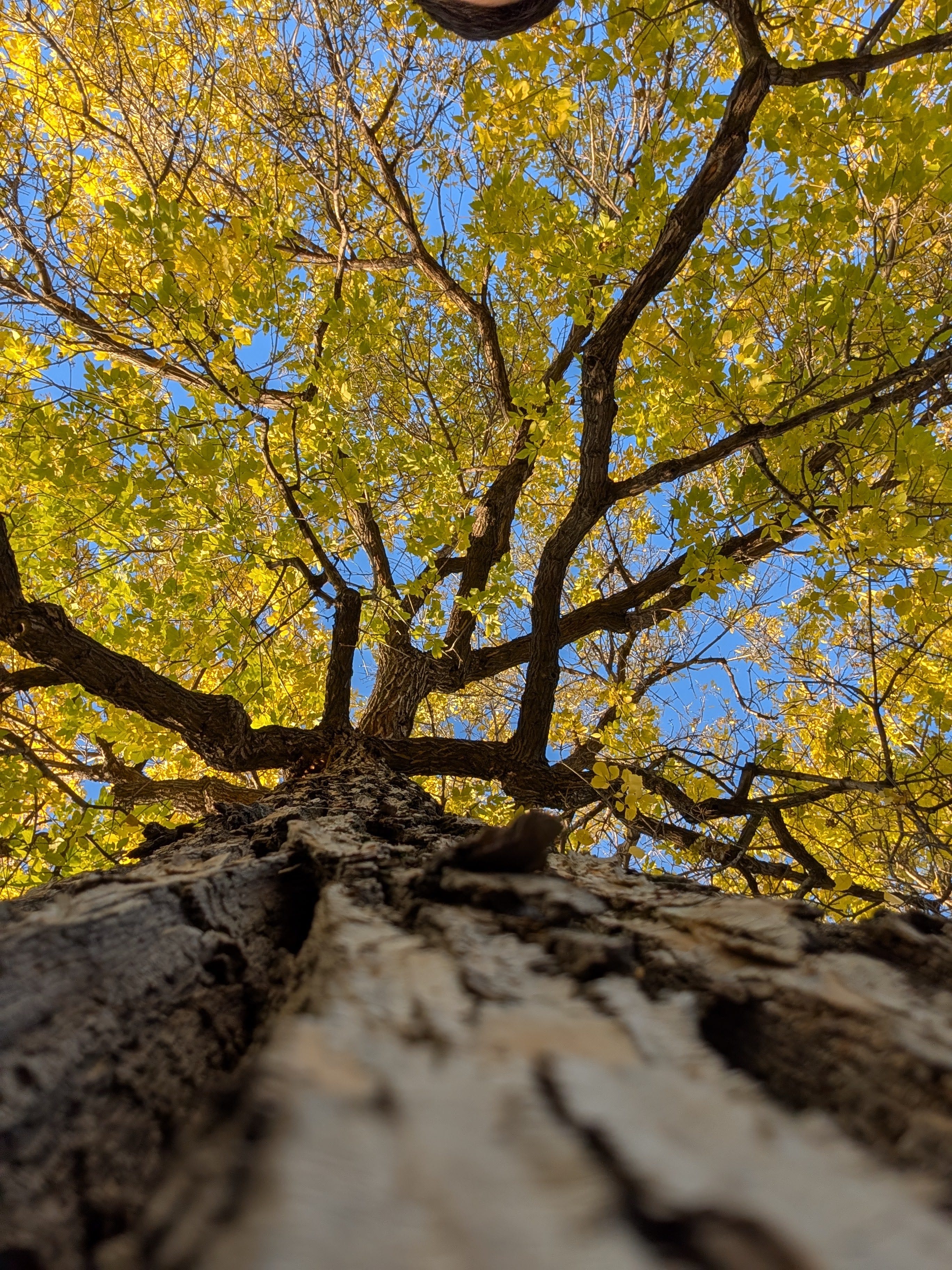
One recent morning, a gray chill filled the air and thick clouds hung low. Don’t get me wrong, it wasn’t ominous. I absolutely love these random gray days we get here in the Denver area, so I set out toward my new favorite yellow tree with my pup leashed and in tow. Upon my return from a month on the road, this October tree had lit up butterscotch and its color seemed to engulf everything below.
Her gnarled branches reach out crazy-like and create a canopy that I stood under every day for a week while she sloughed off her umbrage. I watched and documented; one photo a day, camera against her trunk and pointing up toward her many arms. Snap. Every photo revealed the impending inevitability: death.
I haven’t experienced Autumn this way in well over a decade; perhaps, since my childhood walks to school, but even then, we were cooped up inside for eight hours a day in the fluorescence instead of daylight. Last spring I left classroom teaching, and with it, a stable income, a shared purpose, and the reliable rhythm of the school year. The loss felt immense. Jung might have called it the death of the persona. But that morning, standing under my yellow tree, I realized what I had gained: direct connection with the seasons. With time itself.
Over three days, her leaves dropped in a hurry. The ground beneath her and her two nearby sisters became a sea of crunch. Passersby could watch me daily parading through the heaps, my socks-and-sandals feet chomping on the piles. That whole week, on the floors of my home, bits and pieces of leaves appeared everywhere. Even in my bed.
But on this particular gray morning, I stopped in my tracks on the sidewalk, maybe fifty yards short of my tree. I almost stepped on it. My dog was busy with sniffing the grass, he didn’t even notice it. In the middle of the sidewalk on the greenbelt, a breathtaking sight: one in-tact, upright, dead Starling. Its feet were reaching up towards the sky, its head a bit turned. Black body, speckles of white and gray. One tiny circular drop of blood next to its head, another splotch nearby.
I instinctively looked up toward the sky, searching futilely. I bent down and looked at it closely, another strange instinct: maybe it’s not dead, maybe it’s cold? It didn’t make sense. There were no structures nearby, no power lines, no predators, and the bird’s body didn’t look like there had been recently, either.
There was no question in my mind, this bird literally dropped out of the sky.
I was disappointed (it was one of the very rare days I’d left my phone inside during a walk) I couldn’t snap a picture of it. But the image hasn’t left me and I don’t think it ever will. The moment I saw it, my old accident flashed through me, like it always does.
You see, I have a long, symbolic history with birds. When I was thirteen, I had a bad bicycle accident that I’ve often thought changed the trajectory of my life for the worse. The same crash that shattered my teeth also took my voice. That late afternoon in 1998, while my parents and I stood outside the office waiting for the dentist to arrive for our little emergency, I held a bloody towel to my face, and what was left of my front teeth hung from my mouth precariously. A young tree planted in the sidewalk shaded us. Maybe the bird was aiming for that tree and overshot, the same way I did on my bike. It slammed into the enormous office window and dropped to the ground, dead. Like the bird, I had hit something I couldn’t see.
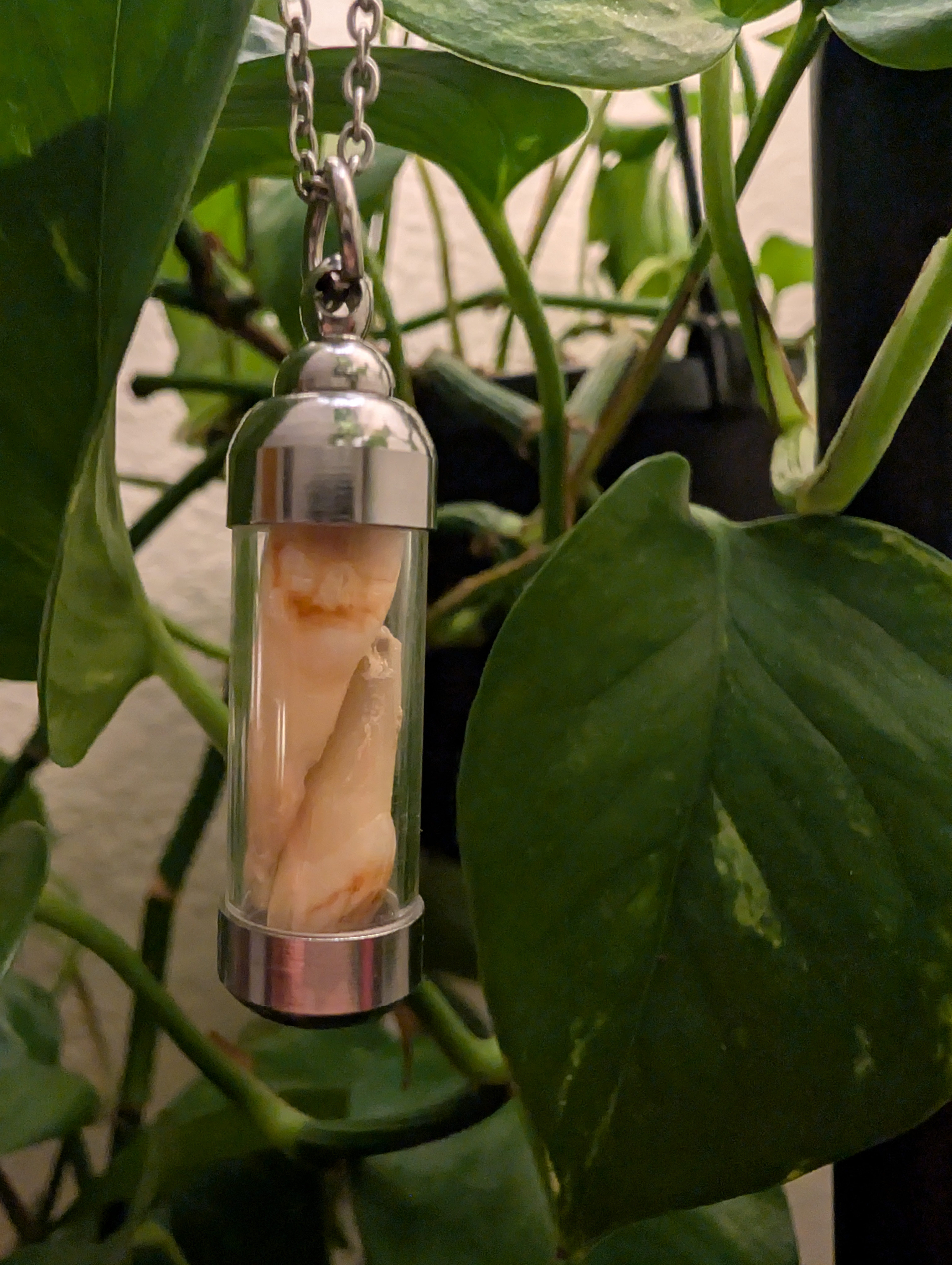
I remember feeling scared at the whack of its body into glass, devastated when it fluttered briefly on the ground and lost its life. But the other day when I saw that dead Starling, I didn’t feel a fear or a sadness; only acceptance. Acceptance of the mystery. Wonder at the mystery. A closeness to the symbol. A curiosity.
I’ll admit, being deep in Shadow work lately, I did have a moment of what the fuck? What does this mean for me? A brief question of danger. Is something bad going to happen?
I sat with this Dead Starling moment for days. I explored the symbols that birds have been for me over the years. First, a life cut short. Then, the freedom of flight. Now? Well, I’m not quite sure. It’s easy to glom onto the obvious: the death of the persona, the death of my old life. But I don’t buy it.
A few days after the encounter, I started Googling my way towards the species of this particular dead bird.
Common birds Colorado
Common birds Longmont, Colorado
Common dark birds Longmont, Colorado
European Starling
That’s it, I thought. A Starling.
My only context for Starlings comes from my friend and mentor, who talks about their murmurations: those living clouds that twist and ripple across the sky as if hundreds of birds were sharing one body. She speaks of them as a metaphor for recovery: the way a flock spirals toward healing, then veers suddenly away, yet remains connected all the while.
It reminds me of the Shadow work I’ve been doing lately as part of the beautiful program Shadow of the She, created and led by Hannah Fraser Moore. It’s been a slow descent; a gentle approach of the things which have been tucked away there, some for nearly a lifetime, waiting to be met. I’ve encountered parts of me I recognized instantly: the musician, the writer, the artist, and other parts I have locked away for so long I didn’t even recognize them: my rage, my emotional truth, my desire. So very many wounded parts: the 6-year-old who was screamed at in the night to stop crying, the 13-year-old whose world was shattered by a traumatic accident, the 19-year-old who lay alone and sick, waiting, waiting, waiting for someone to come.
A couple weeks ago, I had an incredibly powerful encounter with the latter. As part of my integration work, I had been toying with the idea of performing with my guitar at an open mic in town. Growing up, I loved making music. It started as a natural joy; singing, dancing, choreographing in my childhood bedroom late at night. Over time, it became a way to connect with and channel my painful emotions; screaming into the mic while shredding the electric guitar in my high school emo band, listening to Mineral in my headphones on the way down the shore, getting goosebumps while playing drums in the worship band at my church. But once I started drinking at nineteen, this side of me only seemed to come out when I was drunk. I would walk down to the cafe on summer nights in my hometown, flask tucked into my pocket, and play at their open mic. I could only do it drunk.
I’ve been in recovery now for two years and eight months and this hurdle is not one I ever thought I would get over: singing live, sober. It terrified the ever-living shit out of me. It still does. My therapist suggested that maybe it terrifies me in proportion to how important it is.
So, I spent a few weeks plucking on my guitar again, revisiting old tabs and chord sheets for songs I used to play often, struggling to find my voice again. The first Tuesday, I just went to watch, to observe, hoping that would tame the fear a bit. The second Tuesday, I showed up with my guitar and put my name on the list, but bailed before my turn came up.
That was the night I met my nineteen year old self. When I got home that night, I felt a driving urge. I wanted to go right back out and try again the next night. I needed to. But I knew there wasn’t another open mic in town until the next Tuesday. I thought if I didn’t go right back into public to express myself musically, I’d never be seen.
I sat quietly in bed, sat with this sudden urgency in me. An old friend often spoke about how nothing real and true starts from a sense of urgency.
What is this sudden need? I asked. Why do I feel like if I don’t go out and play right now, my chance will be lost forever?
That’s when nineteen-year-old-me showed up. She didn’t show up with words. She flashed in my mind as an image, a memory:
I’m laying alone on an old, pukey-green couch in my first apartment. I can’t breathe through my nose and my chest is on fire. I’m sick and I’m longing. I’m longing for someone to come care for me. I’m longing for my mother to come care for me. I know in my bones that it’s a long shot, but I call her anyway. I tell her I’m so sick and I need tissues or medicine, I can’t breathe. I remember begging. I see her headlights in my window when she pulls up. I hear a knock on the door. It’s not her, it’s my baby brother Johnny. I look through the screen door, she’s smoking a cigarette in the driver’s seat. He leaves and I’m left with expired cough medicine and a half-used box of tissues that reek of cigarettes. They pull away. It’s a boulder now, crushing me, the visceral realization: I will never have a Mother.
The tears come as though they will never stop. My body shakes, heaves, on and on and on. I will never have a mother. The wailing grows so massive and loud that I’m certain one of my neighbors will hear me. I think, ‘maybe they’ll come.’ But no one comes. No one ever comes.
When this memory visited, it was obvious what it needed me to know: my urge to go play my guitar, to run right out to the next open mic as soon as possible, is born of this longing to be seen, to be held. But then, something else appears, and it’s not an image of me on an open mic stage.
I walk through my nineteen-year-old-self’s apartment door that night. In my hand is a plastic grocery bag. In the bag: brand new cough syrup, a brand new box of tissues, a brand new box of Emergen-C, a brand new box of Throat Coat tea, a brand new aromatic candle, a brand new jar of Vick’s Vapo-Rub. I drop the bag on the kitchen table and move with confidence toward her. She’s still on the couch and she’s still shaking and wailing. I grab her, pull her onto me, tell her again and again until she hears it, “I’m here. I’m here. I’m here. I’m here.” I pick her up and put her in the shower, turn the hot water on. While she’s in the shower, I’m making her bottom-bunk bed up all cozy. Sheets tucked, blanket smoothed over, pillows fluffed. When she comes out of the bathroom, I lay her down in her bed, I lay her head on my shoulder, I lay my hand on her head and run my fingers through her hair. Over and over again, I tell her, “I got you now. I got you. I got you. I’m so sorry it took me so long to get here. I’m so sorry you waited and waited and waited. I’ll never let you feel that pain of waiting again. I’ll never let you feel that again.”
Something loosened. Another sudden flash: play the song “You Are So Beautiful” by Joe Cocker. I flipped my phone over and opened Spotify, played the song. My tears surged again, as I met her there in her pain. I sung to her…
You are so beautiful
To me
You are so beautiful
To me
Can’t you see?
You’re everything I hoped for
You’re everything I need
You are so beautiful to me
To me
“I’m so sorry no one ever told you this. You are so fucking beautiful. You’re beautiful when you’re sick, you’re beautiful when you’re on stage singing, you’re beautiful when your teeth are smashed, you’re beautiful when you’re fat. You’re so fucking beautiful. I’ll never let you forget it. I’m here. I got you. I got you. I got you.”
My room finally went quiet except for my breathing. The tears had run their course. My hand on my chest, something in me had gone still; not empty, but complete.
*record scratch*
What the fuck does this have to do with a dead Starling in the middle of the sidewalk on a morning stroll?
What felt most strange and numinous to me was how the Starling appeared to have dropped from the sky, as though it had just given up flight. When I think of it like this, the meaning becomes deadly clear (no pun intended). Flight. As in fight, flight, freeze, fawn. As in,
the instinctive physiological response to a threatening situation, which readies one either to resist forcibly or to run away.
As in, what I have been doing for years, either consciously or unconsciously, through various avenues, ideas, and actions. But when it comes to the dead Starling, perhaps the symbol, for me, is this: no longer running. I want the symbol to be more tidy, birds don’t run, they fly, and flight is freedom. But it’s not that tidy, and perhaps the Unconscious never really is.
The other night, when I met my nineteen-year-old self, and her deep, aching desire to be seen, to be held, to be cared for, to stop having to wait, I stopped flight. I dropped from the sky and slammed into the ground and gave up the migration away from that part of me that has been hiding in my Shadow, still waiting to be seen, to be held, to be cared for, and I gave her all of that and more.
According to Jung, symbols are “overdetermined,” their meanings are many and can be mined in many circumstances and contexts, even to the point of seeming contradictory. Another one that comes to mind for the dead Starling, for example, is the dropping of my persona as a public school teacher earlier this year. Not a final death, not an ego death, more of a sloughing off of an old way of being in the world to access my deep, authentic Self, not without pain and a felt sense of dying. Perhaps another essay for another time.
This past Tuesday, I went to open mic with my guitar and put my name on the sign-up list again. My premenstrual and preperformance nervous system in overdrive, oh how I wanted to take flight. My friend Margot came with me and as we sat and watched the eight performances before what was scheduled to be mine, I constantly fidgeted in my seat, shifting, turning to her with worried eyes, saying things like “what if” this and “what if” that, over and over and over again. As the performer before me ended their last song, something took over. I stood up, I unpacked my guitar from its case, put it over my shoulder, tuned it while walking towards the stage, up the steps. I adjusted the mic stand to account for my small frame. I couldn’t seem to say anything, I just kept looking at Margot. I couldn’t breathe.
Am, F, Dm, G.
My hands remembered, my body remembered.
My eyes closed and I sang and played through the fear, with the fear. My voice shook, my hands shook, my legs shook, though I don’t think anyone noticed but me. And just like that, my song ended. My one song. Not whatever I had planned, but what I found myself able to show up and do, even when it felt like every cell in my body said, no -- run!
Granted, I did all but run off the stage when my song ended. But when my last foot hit the floor, my face lit up with a smile. I just couldn’t believe I did it. I did it. And I did it sober. And I did it terrified. And I did it.
I packed up my guitar before anyone could say anything, grabbed Margot and her son, and ran for the door, because integration doesn’t happen immediately and finally, it’s not like a bird dropping from the sky. It takes time. A lifetime.
As I weaved around the tables and past the different audience members, I couldn’t get out quickly enough because they kept grabbing me, stopping me, one even chased me down, to tell me I did a great job, they loved it, I should play Joan Armatrading next time, I’m strong. Their responses slowed me down. I shook their hands, I thanked them, I hesitated to believe them, but ultimately I did. I had to. They didn’t owe me a thing. No one had to say anything to me, they chose to.
I stepped outside, still trembling. The night air met me like water, cool and wide. I sat in my car, breathing long exhales until the world came back into focus.
I did it.
I stopped flight.
I showed up in the rawness, the fear—
and I didn’t die.
I molted.
I love the ride I took, reading this.. Returning from a trip, the walk, the accident, the sickness. Then the discovery, the recovering, the truest of human thoughts and feelings.. and My favorite was when I felt I was in that room, watching you with your Guitar, Your Fear and the Nineteen year old ! and You Are SO Beautiful, to me ! Great Job.. nice ride .....look Ma, No Hands !!!!!!
Beautiful writing! When you stop fearing change, you heal. Best wishes!